
Real projects. Real results. See how Paywiro has helped companies unify, route, and scale their payment infrastructure.


A mid-sized European fashion retailer had grown organically and accumulated three separate payment integrations: one for card payments, one for BNPL, and one for local bank transfer. Each had its own SDK, webhook format, error codes, and deployment pipeline.
Developer onboarding took 2–3 weeks just to understand the payment layer. Any provider issue required expertise in that specific integration. Checkout failures from misconfigured failover were costing roughly €15K/month in abandoned transactions.
Paywiro deployed a unified gateway layer normalizing all seven providers (Stripe, Adyen, Klarna, PayPal, iDEAL, SEPA, and a regional acquirer) behind a single REST API contract. Smart routing rules directed traffic by card type, currency, and cart value. Webhook output was normalized to a single format across all providers.
A B2B SaaS company was using Stripe’s built-in subscription tooling but had outgrown its constraints. They needed complex proration logic, custom dunning workflows, multi-currency invoicing with local tax rules, and the ability to switch payment providers per region without breaking existing subscriptions.
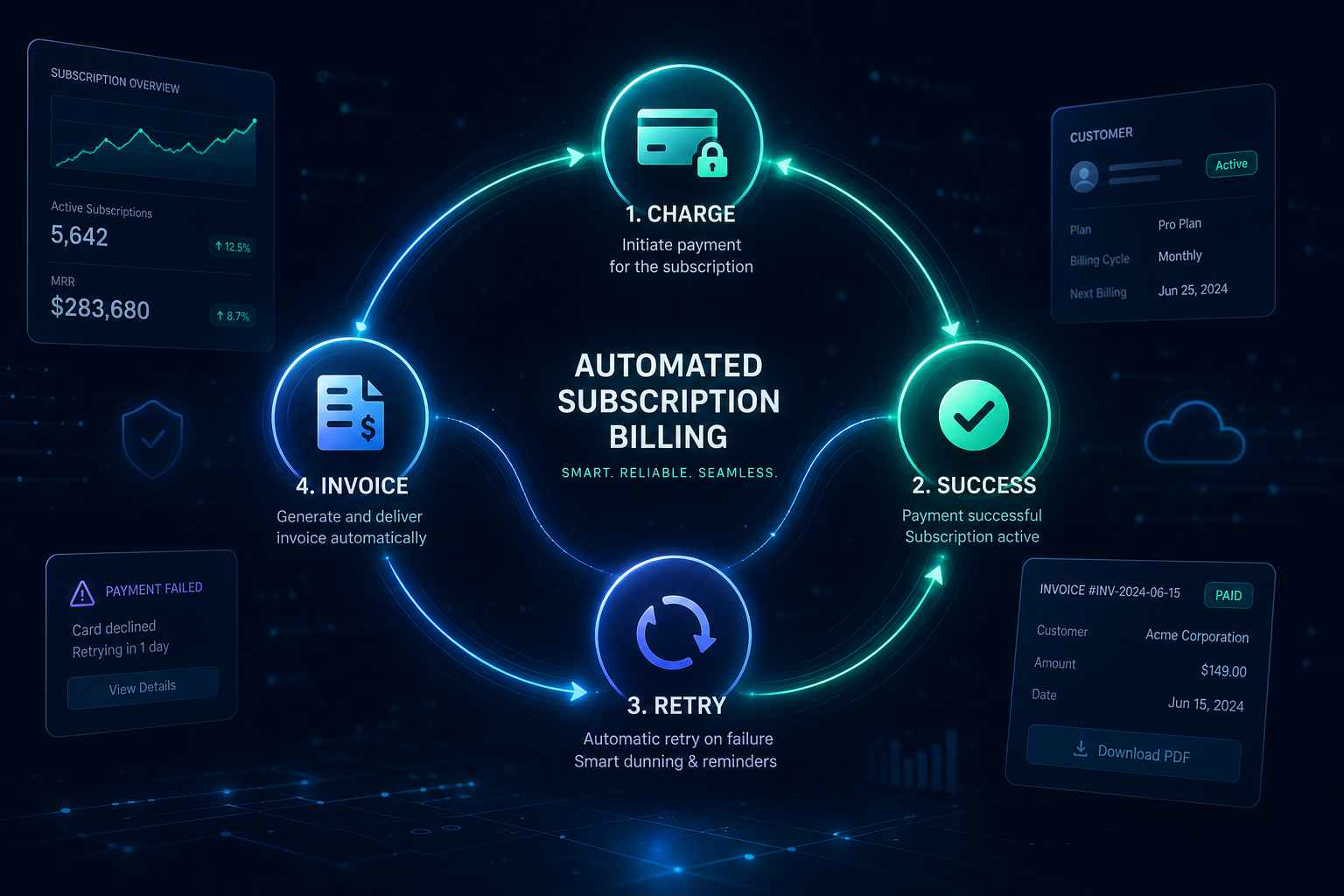
Paywiro designed and built a custom subscription management layer sitting above both Stripe and Adyen. The system handled plan management, billing cycles, retry logic (4-attempt dunning with configurable backoff), multi-currency conversion, and PDF invoice generation with VAT compliance. An admin UI allowed the finance team to manage subscriptions without engineering involvement.
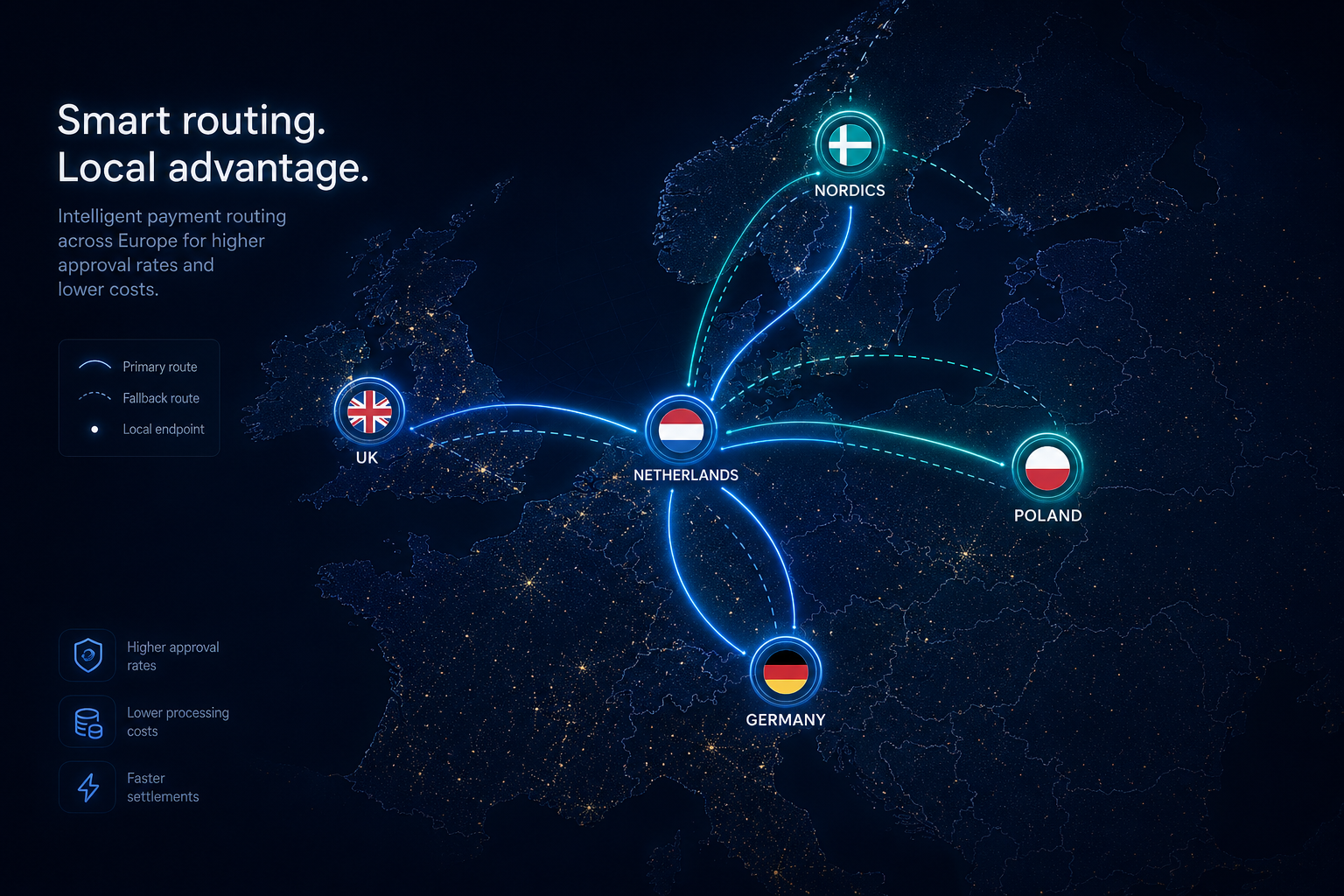
A pan-European Online Travel Agency processed payments across 9 countries with a flat routing strategy — all traffic to one global acquirer. Conversion rates varied wildly by region, fraud rates were above industry average, and local payment methods (iDEAL, BLIK, Trustly) were entirely absent despite strong regional demand.
Paywiro built a regional routing engine with fraud scoring middleware. Rules directed transactions to the highest-converting acquirer per country and card type. Fraud scoring integrated with a third-party ML model to flag high-risk transactions before authorization. Local payment methods were added for NL, PL, and Nordics, and 3DS2 challenge logic was tuned to minimize friction on low-risk transactions.
A payments startup with a founding team of product and business profiles had a working prototype but no production payment infrastructure. With a seed round investor deadline 16 weeks out, they needed a complete, PCI-compliant payment gateway with 3 provider integrations, a developer API, admin dashboard, and deployment pipeline — built and handed over as a fully owned codebase.
Paywiro deployed a dedicated 4-person team (2 backend engineers, 1 DevOps engineer, 1 solution architect) to build the entire payment infrastructure. The delivery included: core gateway API, Stripe + PayPal + Adyen integrations, webhook engine, admin panel, PCI DSS scoping documentation, Kubernetes deployment on AWS, CI/CD pipeline, and full API documentation.